Chase Karbon is a staff writer and first-year MPP student.
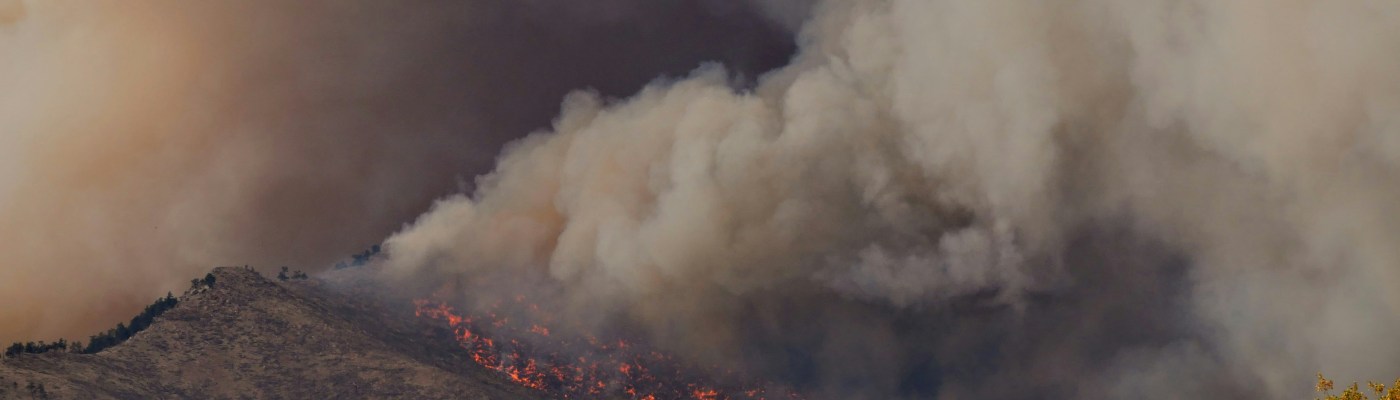
California and Florida have recently experienced devastating natural disasters resulting in billions of dollars of damage and thousands without homes to return to. In late September and early October 2024, Hurricanes Helene and Milton hit Florida. Months later, California experienced multiple wildfires in the greater Los Angeles region, hitting Pacific Palisades and Altadena the hardest. In the wake of these disasters, both states’ insurance markets have come under strain as several national insurance companies have left residents with ballooning insurance premiums. As climate change increases the frequency of natural disasters, residents of the affected states are looking to state and federal government policies to supplement the loss of private insurance options. The spike in usage of state-funded insurance programs known as Fair Access to Insurance Requirements (FAIR) plans has sparked calls for federal involvement to reinsure these plans and offer cheaper options for public home insurance. Meanwhile, California has used regulations to mandate that insurance companies remain in high-risk residential areas. These regulations are only a small step toward stabilizing insurance markets in California and Florida.
Florida
The high number of tropical storms and hurricanes Florida has experienced in the past decade, an environment that encourages litigation, and a reliance on state- and federally-sponsored insurance programs have led to fewer policy options for Floridians and more financial burden following natural disasters.
In 2017, the Supreme Court of Florida allowed for plaintiff attorneys to be paid out 2 to 2.25 times the amount of their hourly billing rate, creating a favorable litigation environment by incentivizing attorneys to take on lawsuits against insurance companies. As a result, Florida alone accounted for 79 percent of U.S. home insurance lawsuits in 2022. During that same year, to combat this unstable legal environment for insurance companies, Florida made several reforms to regulate the state’s insurance market. One of the reform’s most consequential changes requires a claim holder to pay entirely out-of-pocket for legal fees when taking action against an insurance company. While the reforms were able to stabilize the market temporarily, reduced risk of legal action following Hurricanes Helene and Milton incentivized insurance companies to deny more claims, leaving policyholders with limited options following the disasters.
Florida hurricane victims have poor access to flood insurance, leaving many to pay out-of-pocket for flood damage. In Florida’s insurance market, wind and rain insurance is separate from flood insurance. While most insurance companies provide wind and rain coverage, few offer flood insurance, meaning that only one-fifth of Floridians have any type of flood insurance. While Milton victims saw mostly wind and rain damage to homes, Helene victims were predominately subject to flood damage. To make up for the lack of flood insurance, most Floridians have turned to the National Flood Insurance Program (NFIP), a FEMA-run flood insurance program that is administered by over 50 insurance companies and designed to fill the gap in flood insurance coverage. The program covers an estimated 99 percent of flood damage but has faced criticism in recent years for underpricing plans and ballooning premiums. The NFIP may also require homeowners to pay costs out-of-pocket if the damage exceeds 50 percent of a home’s pre-storm market value to account for floodplain management regulations.
Floridians whose homes were destroyed during the hurricanes must decide whether to utilize NFIP to rebuild their homes and risk paying out-of-pocket fees or find housing elsewhere. Further, NFIP does not cover temporary housing relocation, meaning more out-of-pocket costs for enrollees. FEMA’s Individual Assistance grants, which range from $3,000 to $6,000, may help with immediate costs, but in the long term, Floridians affected by the hurricanes are left with significant financial burdens.
California
Despite regulation and a state-backed insurance program designed to be a last-resort option, the departure of several large private insurance providers and the increased frequency of wildfires in high-risk areas have led to limited coverage options and high premiums for California residents.
In 2017 and 2018, wildfires hit northern and southern California, totalling almost $20 billion in damages. To prevent further destabilization in the state’s insurance market, the state compromised with insurance providers, allowing providers to use updated risk-modeling tools in exchange for increasing the number of policies in wildfire-prone areas. Risk models—referred to as “Catastrophe Models” by the National Association of Insurance Commissioners (NAIC)—“[simulate] thousands of plausible catastrophic events scenarios” based on prior disaster history as well as the geology and geography of the area being measured. These models quantify future financial impacts of disasters, giving insurance companies greater control of information that affects the cost of premiums and rate of policy renewals. This compromise took effect in 2024 and was expected to increase coverage in wildfire-prone areas by mid-2025.
However, the 2025 Los Angeles fires stalled efforts to increase the number of policyholders in high-risk areas. State regulation places a moratorium on policy cancellation and non-renewal for a year after the governor declares a state of emergency. While this prevents loss of policyholders in affected areas, the goal of increasing policyholders is, at best, stalled for the time being.
Before the implementation of the 2024 insurance regulations, notable insurance companies such as Allstate, Nationwide, and State Farm stopped renewing home insurance policies in California. The exodus of insurance companies has increased demand for the state’s FAIR plan, a public insurance program funded by a pool into which insurance companies are required to invest. FAIR is meant to be a temporary solution for individuals unable to find insurance by traditional means. However, typical FAIR plans have higher premiums and deductibles, and they offer less coverage compared to private insurance plans. The result is similar to Florida’s—limited options are pushing consumers to either take a public backstop or have no insurance at all.
Solutions
There is no easy solution to either state’s insurance crisis, but policymakers have suggested reforms to provide residents more insurance options while reducing the pressure brought on by high insurance premiums. In 2024, then-California Representative Adam Schiff proposed a bill to regulate home insurance companies similarly to health insurers under the Affordable Care Act (ACA), prohibiting them from dropping customers living in high-risk wildfire zones just as the ACA prohibits dropping customers based on “pre-existing conditions.” However, the bill failed to gain traction, and with a Republican trifecta at the federal level, the idea is unlikely to go anywhere. Before the January 2025 Los Angeles fires, California Insurance Commissioner Ricardo Lara and the California Department of Insurance (CDI) required insurance companies to cover wildfire-prone areas “equivalent to no less than 85% of their statewide market share.” In practice, this means that if a company writes policies for twenty out of 100 homes statewide, it must cover seventeen out of 100 homes in a high-risk area. In the same set of regulations issued last year, CDI required insurers to use a single future-risk model for determining rates for consumers and reinsurance costs, rather than using separate models for each.
For Florida, Citizens Property Insurance has, in combination with the NFIP, served a role similar to that of California’s FAIR plan for wildfire victims. Although it withstood back-to-back storms in the fall, the state-backed nonprofit—meant to be an insurer of last resort—has been forced to take three times as many policyholders as it did three years ago due to the frequency of hurricanes in the state. Because Florida, California, and 31 other states utilize versions of public insurance programs, some have proposed the idea of a federal reinsurance program for all disaster-related insurance that would reinsure these states’ versions of FAIR plans. The program would replace the private reinsurers, including Swiss Re and Munich Re, that FAIR plans rely on. With a publicly-funded, federal government reinsurance program, state-level FAIR plans could reduce premiums while offering more comprehensive coverage.
As climate change drives more frequent disasters, states and private insurance companies will need to consider substantial reforms to prevent an unstable insurance market from threatening American consumers. The question is whether there will be enough political and industry consensus to drive meaningful change.
Photo courtesy of Malachi Brooks on Unsplash.
The views expressed in Policy Perspectives and Brief Policy Perspectives are those of the authors and do not represent the approval or endorsement of the Trachtenberg School of Public Policy and Public Administration, the George Washington University, or any employee of either institution.
 Policy Perspectives